
23 October 2026
Condensation on Your Windows? What Causes It and How to Stop It
Every autumn, as the clocks go back and the heating goes on, the same question starts coming up on our surveys across Dorset and Wiltshire: why are my windows running with water every morning? Condensation is one of the most common problems we see at this time of year, and it is often misunderstood. Sometimes it is a sign that your windows have failed. Often it is not the windows at all.
Here is a straightforward guide to what causes it, how to tell the difference, and what you can do about it.
What Causes Condensation on Windows?
Condensation forms when warm, moist air inside your home meets a cold surface and cools down, so the moisture turns back into water. Cooking, showers, drying washing indoors, and even breathing all put water into the air. A family of four can add several litres of moisture to a house every day.
The glass is usually the coldest surface in a room, so that is where the water appears first. The colder the glass and the damper the air, the worse it gets. That is why condensation is at its worst on cold mornings in October to March, and in bedrooms and kitchens.
In Dorset and Wiltshire, a lot of our older stone and brick cottages make the problem worse. Thick solid walls hold moisture, rooms are often smaller, and many homes have had their chimneys blocked up, which removes a natural route for damp air to escape.
Where Is the Condensation? It Makes All the Difference
1. On the inside of the glass
This is the most common type. A little in the morning on a cold day is normal, even with good double glazing. If your windows are streaming every day, water is pooling on the sills, or black mould is growing on the seals and reveals, the air in your home is too damp, the glass is too cold, or both.
Single glazing, very old double glazing and older aluminium frames without a thermal break all have cold inner surfaces, so they attract far more condensation than modern windows.
2. Between the two panes of glass
If the misting is inside the sealed unit, where you cannot wipe it, the seal around the unit has failed and moist air has got in. It will not clear up on its own, and the unit no longer insulates properly.
The good news is that this does not always mean a new window. If the frame and hinges are in good condition, we can often replace just the sealed unit, which costs far less. Kenny will always tell you honestly which you need.
3. On the outside of the glass
Condensation on the outside on an autumn morning surprises a lot of people, but it is usually a good sign. It means very little heat is escaping through the glass, so the outer pane stays cold enough for dew to form, just like the grass and your car windscreen. It clears as the sun comes up.
How to Reduce Condensation
Before thinking about new windows, it is worth trying the simple things. Most condensation problems are improved by getting moisture out of the house:
- Keep trickle vents open, especially in bedrooms. They are there to let damp air out without opening the window.
- Use extractor fans when cooking and showering, and leave them running for a while afterwards.
- Put lids on pans, and dry washing outside or in a vented dryer where you can.
- Keep the heating at a steady, lower temperature rather than short blasts, so walls and glass do not get as cold.
- Wipe sills dry in the morning, and clean any mould from seals with a mould remover before it spreads.
- Leave a small gap between furniture and outside walls so air can move.
- In a stubborn room, a dehumidifier makes a big difference.
When the Windows Are the Problem
If you are doing all of that and still waking up to wet windows and mould, the windows themselves may be part of the problem. Look out for:
- Single glazing, or double glazing over 20 to 25 years old
- Misting between the panes
- No trickle vents, or vents that have been painted shut
- Worn seals, gaps around the sashes or windows that will not close tightly
- Water running down the frame itself, not just the glass
Modern A-rated windows keep the inner pane much warmer, thanks to low-emissivity glass, gas-filled units and warm edge spacer bars. A warmer inner pane means far less condensation, particularly around the edges of the glass where it usually starts.
When we replace windows, Building Regulations also require that the ventilation in your home is not made worse, which is why our windows come with trickle vents. Fitted properly, new windows should make a damp room drier, not more airtight and stuffy.
Period Homes and Conservation Areas
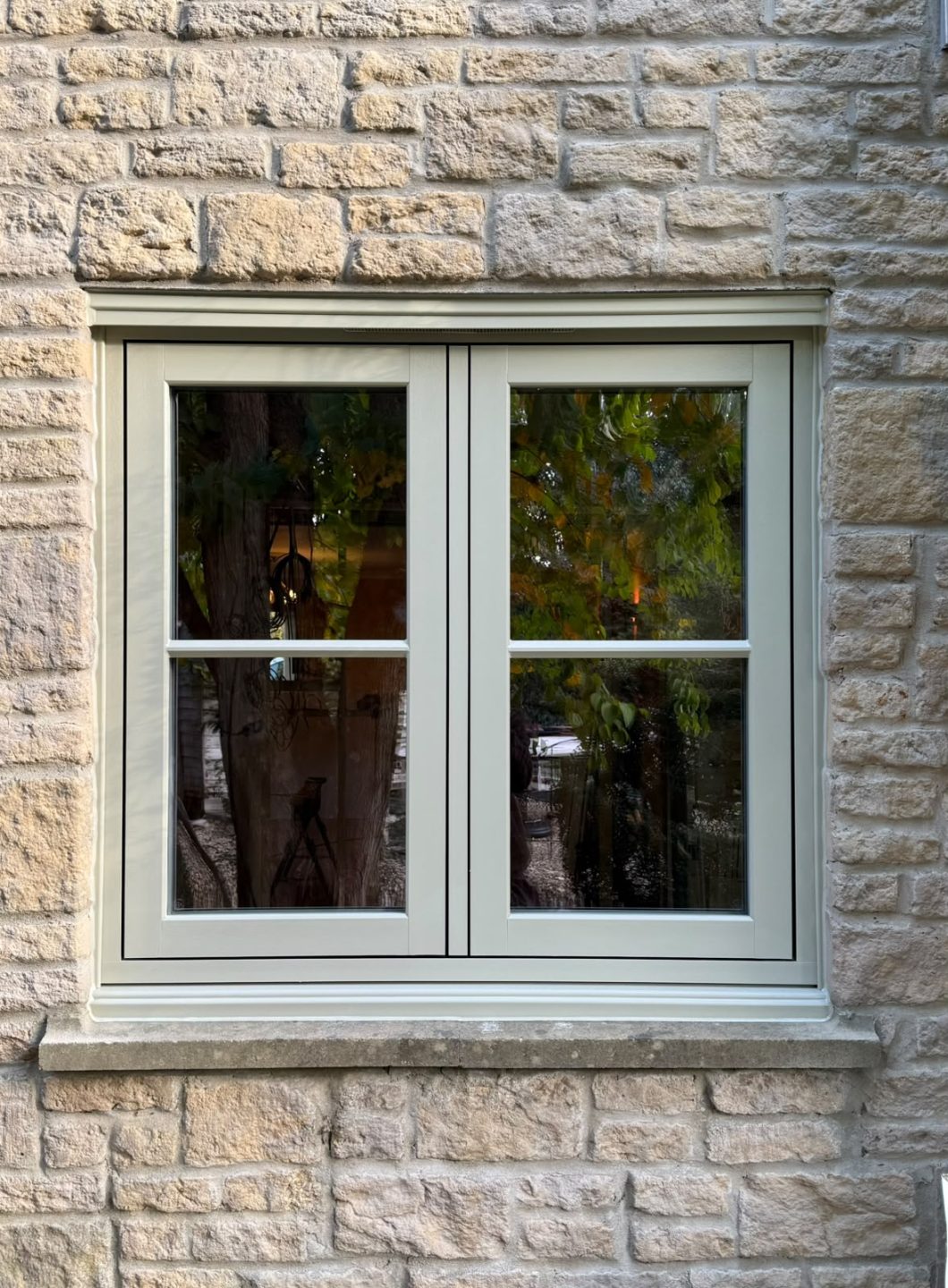
If you live in an older stone cottage or a period house, you do not have to choose between a warm, dry home and windows that look right. Our Heritage Flush Casement window, our R9 timber-look windows and our Roseview sliding sash windows are all designed to look like traditional timber, with modern double glazing inside. You can see a recent example in our case study on pebble grey Heritage Flush Casement windows in Teffont, a stone house in a conservation area.
Not Sure What Is Causing Yours?
If you are not sure whether your condensation is a ventilation problem, a failed sealed unit or a sign the windows need replacing, we are happy to come and take a look. Kenny will give you an honest answer, even if that means a simple fix rather than new windows.
You may also find these useful: 7 signs it is time to replace your windows, are your windows letting the heat out? and how much do new windows cost in Dorset?
We cover Shaftesbury, Gillingham, Blandford Forum, Sherborne, Salisbury, Tisbury and the villages in between. Call Kenny on 01747 859199 or use our contact form to arrange a free survey.
Recent News

14 October 2026
Goldhill Glazing Takes on the Dorset Plane Pull for Wessex Cancer Support
13 October 2026
How Much Do New Windows Cost in Dorset? A 2026 Guide
12 October 2026
How to Choose a Double Glazing Company: 9 Things to Check Before You Sign
7 October 2026
Energy bills are up again: are your windows letting the heat out?
